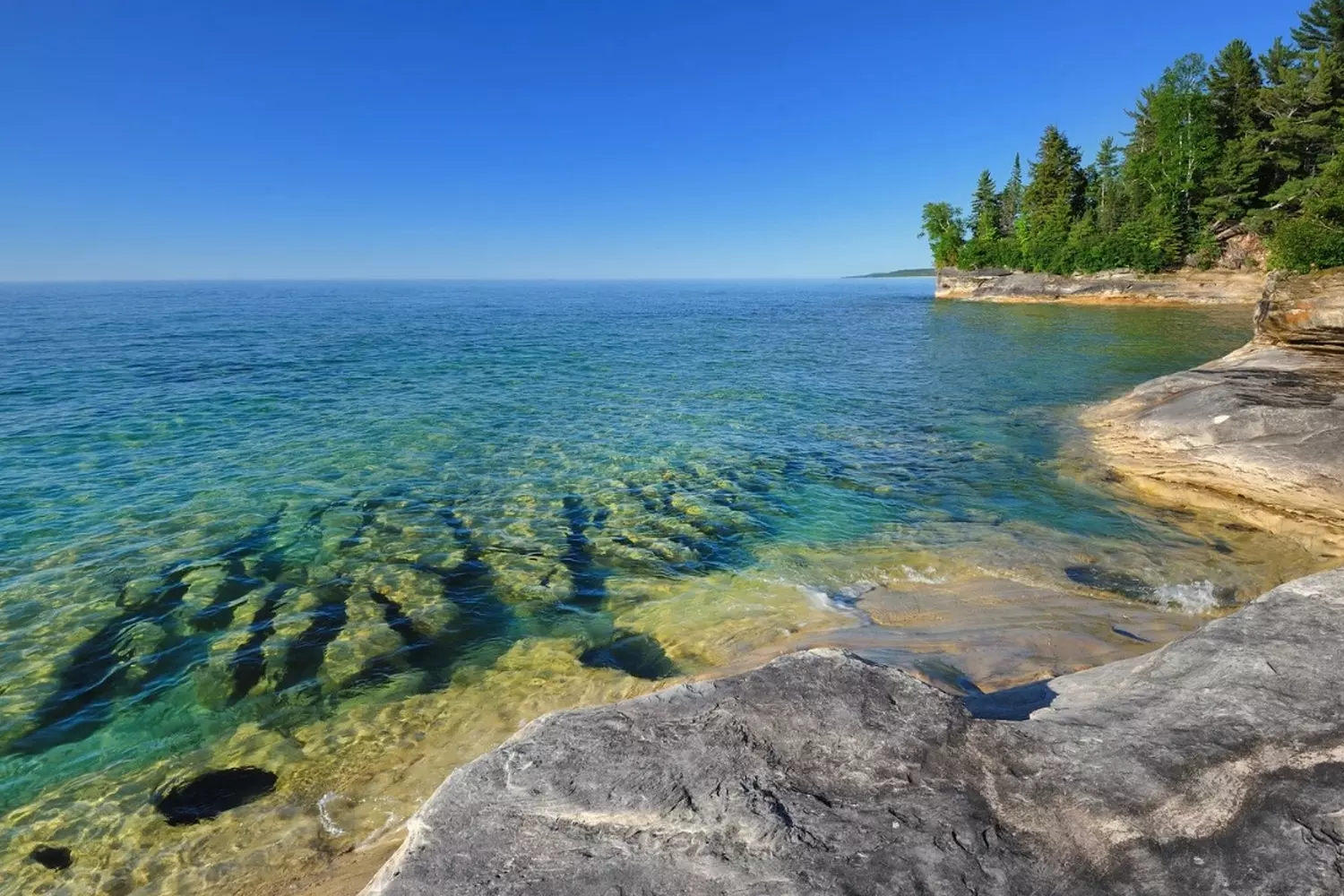
The Great Lakes—Superior, Michigan, Huron, Erie, and Ontario—form the largest freshwater system on the planet, containing approximately 20% of the world’s surface freshwater and playing a critical role in the climate, economy, and ecology of North America. The physical processes that control these lakes include current hydrodynamics, thermocline stratification, evaporation, and ice regimes, which interact with the atmosphere and a drainage basin covering more than 750,000 square kilometers. Understanding these mechanisms is essential for water resource management, water quality forecasting, and adaptation to climate change in the Canada-US region.
Thermal stratification of lakes—the division of the water column into layers of different temperatures and densities—is a key process determining oxygenation, nutrient distribution, and ecosystem health. In summer, the surface epilimnion is heated by the sun and remains light, while the cold hypolimnion at depth is isolated by a thermocline, preventing vertical mixing. In autumn, surface cooling disrupts stratification, triggering autumn circulation, which oxygenates the depths and brings up nutrients. In winter, reverse stratification forms under the ice cover, with the warmest water (~4°C) near the bottom.
Currents in the Great Lakes are driven by wind, differences in water density, and the Earth’s rotation (Coriolis force), creating complex circulation patterns that transport heat, pollutants, and plankton. For example, Lake Ontario has a predominantly counterclockwise cyclonic current, while in Lake Erie, wind surges can cause sharp fluctuations in water level, known as seiches. Hydrodynamic modeling using supercomputers, such as those at the Canadian Centre for Climate Modeling, allows us to predict the spread of oil spills, algal blooms, and changes in fish populations.
Lake ice conditions vary from almost complete ice cover on Lake Superior and Lake Huron during severe winters to partial freezing of Lake Erie due to its shallowness. The physics of ice formation and melting involves heat exchange, crystallization, and mechanical breakdown by wind and currents. Ice cover affects evaporation (reducing it in winter), surface albedo, and navigation, and also serves as a habitat for specialized organisms. Climate change is reducing the duration and extent of ice cover, which has cascading consequences for the region’s ecosystems and economies.
Evaporation from the surface of lakes is a significant component of the water balance, especially during warm seasons, when it can reach several millimeters per day. The physics of evaporation depends on water temperature, air humidity, wind speed, and solar radiation, and is described by equations such as the Penman equation. Evaporation not only regulates lake levels but also supplies moisture to the atmosphere, influencing cloud formation and precipitation in adjacent regions, including lake-effect snow. Monitoring evaporation using satellites and buoys is important for hydrological forecasts.
Water quality in the Great Lakes is determined by a complex balance of physical, chemical, and biological processes: nutrient inputs from agriculture and cities can cause eutrophication and toxic cyanobacterial blooms, particularly in shallow Lake Erie. The physics of mixing and sedimentation influences pollutant distribution, while ultraviolet radiation and temperature regulate the rate of organic matter degradation.
Advertising